Who's in the room
This read runs on two conversations and a cast of people who shaped the story. The three voices first — guest, host, companion — then the figures who keep coming up across the chapters.
.jpg?width=300)
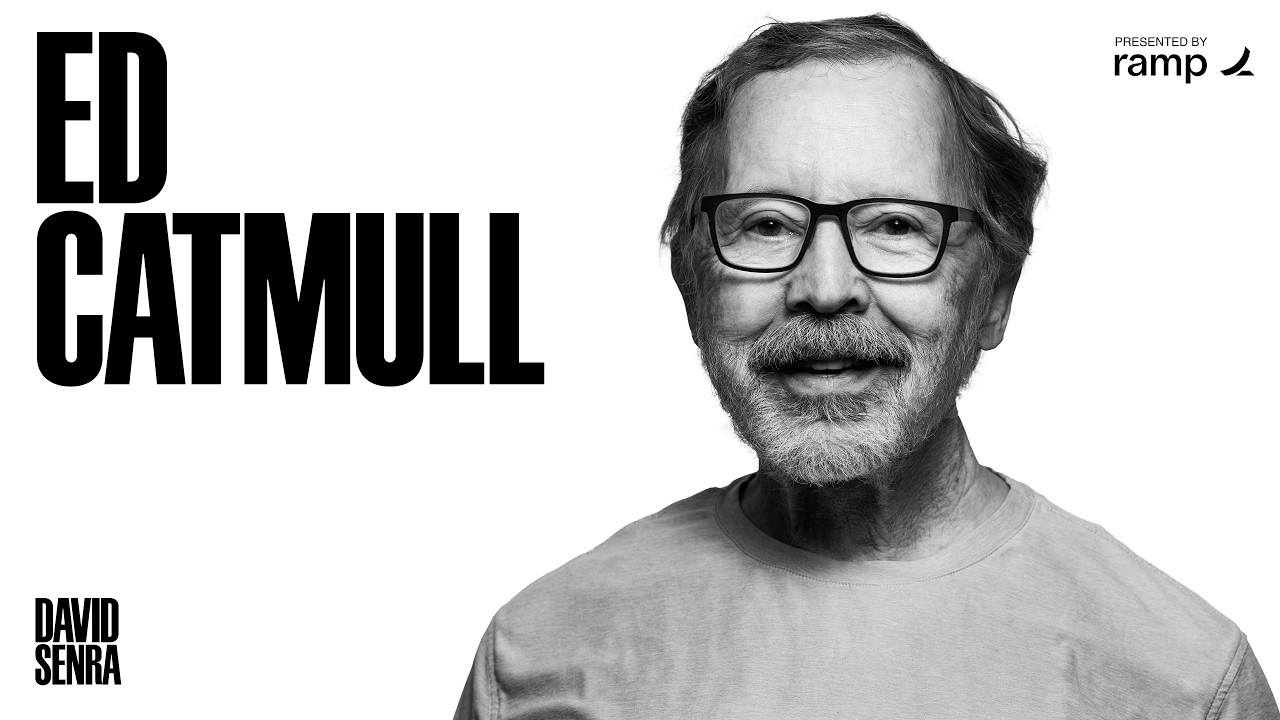
Ed Catmull — the guest
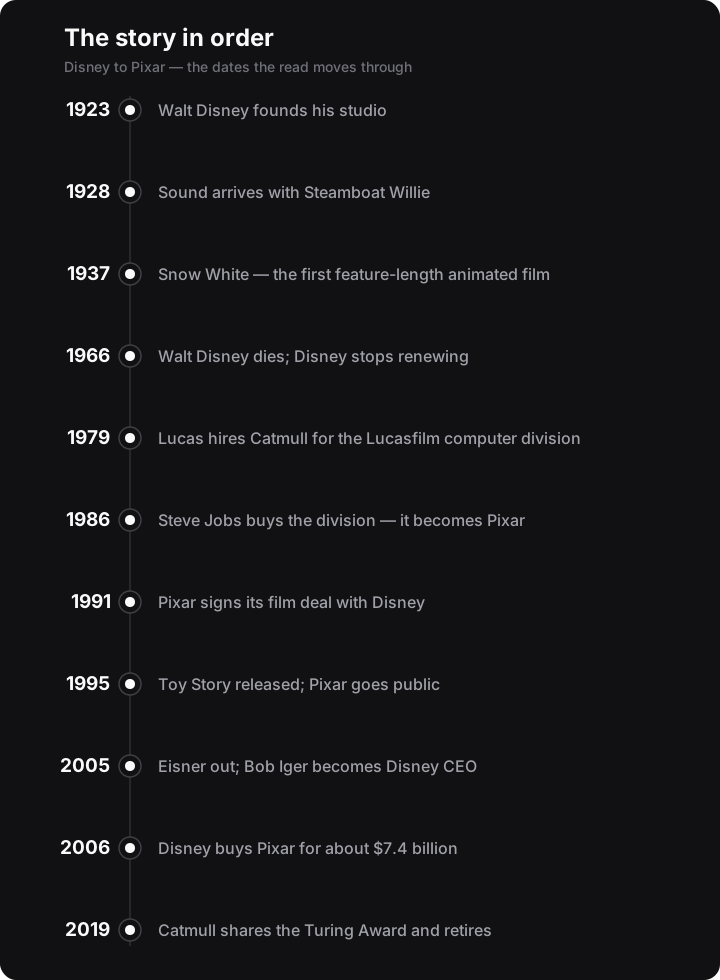
Co-founder of Pixar and former president of Pixar and Walt Disney Animation Studios. He started as a computer scientist — a PhD from Utah who wanted to make the first film animated entirely on computers — and spent forty years building the place that could. He shared the 2019 Turing Award, computing's highest honour, for the graphics work underneath all of it, and wrote Creativity, Inc., the book this whole read sits beside. Retired in 2019.

David Senra — the host
Host of Founders, the podcast where he reads a biography of a great entrepreneur and talks through what he learned. Thousands of hours inside the minds of history's builders — which makes him the rare interviewer who hears an operating principle and immediately knows which founder did the same thing a century ago.

Nicolai Tangen — the companion
CEO of Norges Bank Investment Management, which runs Norway's ~$2.1 trillion sovereign wealth fund — the largest single investor in the world. A former hedge-fund founder who now hosts In Good Company, interviewing the leaders of the companies the fund owns. His separate sit-down with Catmull is the companion wall this read keeps leaning against.

Steve Jobs — the owner who learned to wait
Apple's co-founder, and the man who bought the computer division that became Pixar from George Lucas in 1986 — then funded it through years of losses before Toy Story. He's also the one Catmull eventually kept out of the Braintrust: not as punishment, but to protect the single room where directors had to feel safe enough to be wrong. Died 2011.
.jpg?width=300)
Michael Eisner — Disney's CEO, 1984–2005
Ran Disney through a creative renaissance and then a long, cold standoff with Pixar over their distribution deal. The "worst nightmare" of chapter six is Pixar quietly engineering enough independence that it no longer needed him. Later founded The Tornante Company.

Bob Iger — Disney's CEO, the better hand
Succeeded Eisner in 2005 and almost immediately bought Pixar (2006), choosing to keep Catmull and the culture intact rather than swallow them. He stepped down, returned in 2022, and is set to lead Disney through the end of 2026 while the board names his successor. Chapter seven is the hand he was dealt — and how he played it.

Walt Disney — the one he measured against
The man who founded Disney and, with it, more or less invented the animated film as we know it. He started in the 1920s with almost nothing — a young cartoonist, a small studio, and a mouse — and kept dragging the whole art form forward: synchronized sound in 1928, full colour, the multiplane camera for real depth, and in 1937 the reckless bet of Snow White, the first feature-length animated film, which everyone was certain no one would sit through. It worked. It became an empire — the films, then Disneyland, then a company still standing sixty years after him. What Catmull read in him was the shape of that whole life: never stop reaching for the new tool, even long after the old one is working fine. Died 1966.

George Lucas — the one who hired him first
Founder of Lucasfilm and creator of Star Wars. In the late 1970s he hired Catmull to run his computer division — the group Jobs later bought and renamed Pixar. The motion-blur problem of chapter thirteen comes straight from Lucas's need to make computer images sit convincingly inside real film. Sold Lucasfilm to Disney in 2012.