Who's in the room

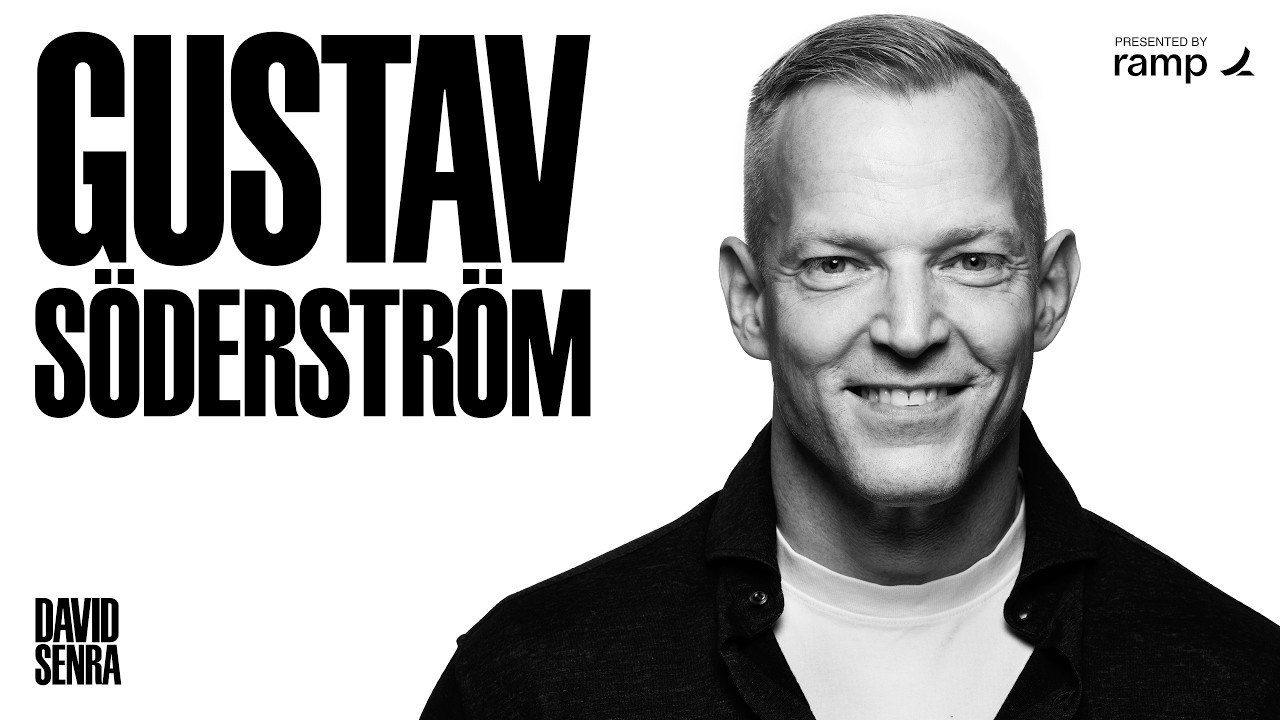
Gustav Söderström — the guest
Spotify's Co-CEO and Chief Product & Technology Officer. Joined in 2009 when it was a small Swedish outfit betting against the download model, and helped build it into the global leader in audio. Before Spotify he founded Kenet Works (mobile messaging, acquired by Yahoo! in 2006), then ran product for Yahoo! Mobile. Took the Co-CEO chair on 1 January 2026 alongside Alex Norström. His own line: "Love science and art — preferably intertwined."

David Senra — the host
Host of Founders, the podcast where he reads a biography of a great entrepreneur and talks through what he learned. Thousands of hours inside the minds of history's builders — which makes him the rare interviewer who hears an operating principle and immediately knows which founder did the same thing a century ago.
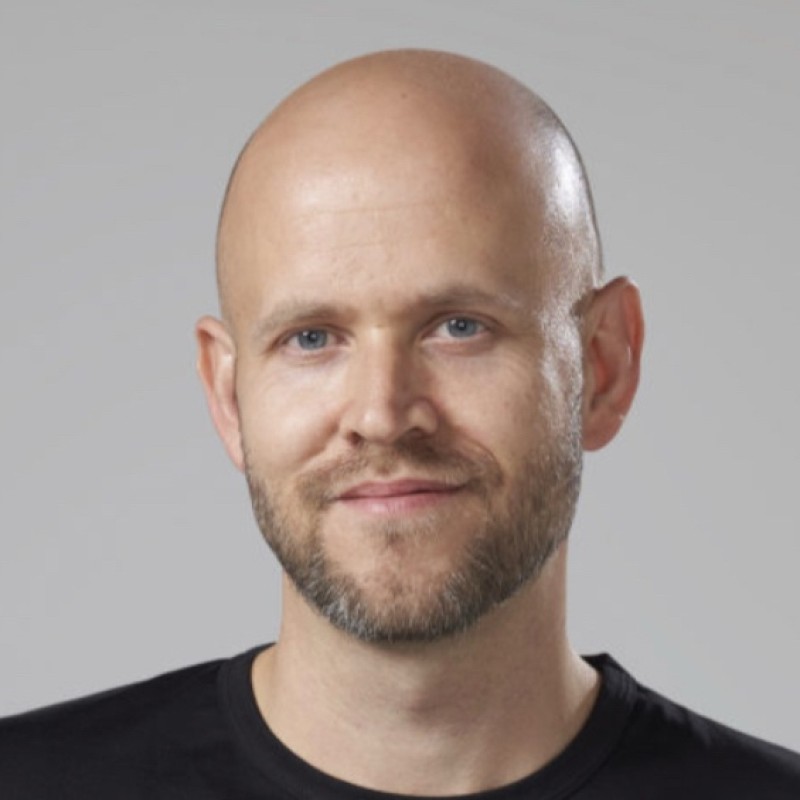
Daniel Ek — the one who keeps coming up
Spotify's founder, now Executive Chairman (Chairman & CEO from 2006 until the January 2026 handover). The person who kept giving Gustav jobs he wasn't ready for. Also founder and Principal of Prima Materia — his investment firm that insists it's not a fund: "We are not investors but builders and active owners." Chairman of Neko Health and Helsing.

Pia Michel — the one who beat Gustav
Head of New Projects at Prima Materia, Daniel Ek's company-building firm, since 2021. A science background — BSc Amsterdam, MSc Groningen — and she's led real deals there, like the longevity startup Epiterna. She's the one David needles Gustav about: a few months back the four of them were racing cars in Sweden — Gustav, David, Daniel and Pia — and Pia won. The point isn't the race. It's that a man that competitive grinned and said "I felt great about losing to Pia." Small human proof of the leave-them-stronger, others-over-self idea the episode keeps circling.
The hierarchy — who speaks to who
The whole shape, after the 1 January 2026 handover — governance at the top, the two co-CEOs, the corporate functions beside them, and the two operating lines fanning down into the squads-and-tribes layer Spotify is known for.
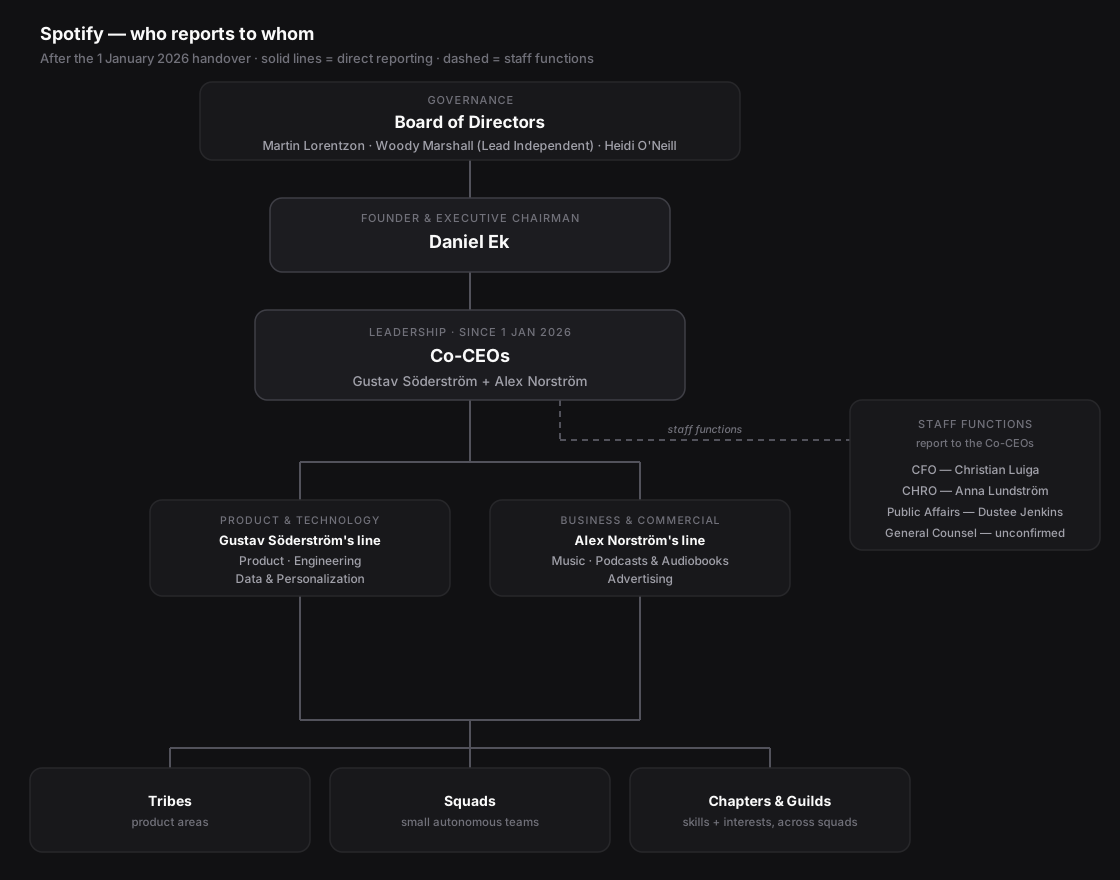
A note on sourcing: the named chiefs are confirmed from Spotify's own governance pages. The General Counsel is left unnamed on purpose — the previous holder departed and the current one isn't confirmed. The division split is Spotify's functional shape, not a leaked chart. Full sources are at the bottom.
Daniel Ek's other seat — Prima Materia
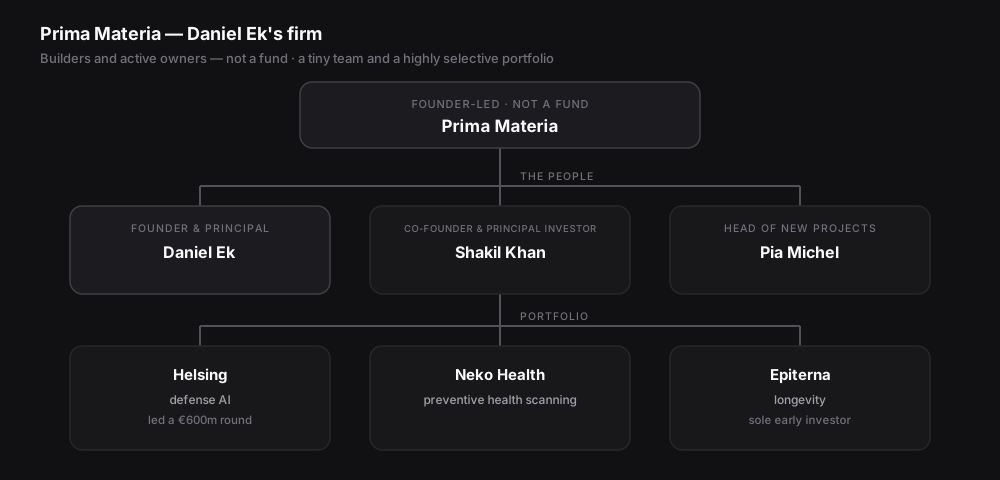
Ek is the bridge between two worlds: Executive Chairman at Spotify, and Founder & Principal of his own investment firm, Prima Materia — the one that keeps coming up in the episode. It's deliberately tiny, and it insists it isn't a fund.
1 · 00:00 — How Gustav prepared to become CEO
📺 What does the video talk about?
How Gustav got ready for the chair — and it wasn't a coronation. Daniel Ek named him and Alex Norström co-presidents nearly three years before the actual handoff: a slow, deliberate transfer. Long before that, Ek kept giving him jobs he wasn't ready for — throwing him into the Facebook integration ("go talk to Zuckerberg") when he barely knew the building. Gustav's own words: at Spotify "you get a new job almost every year." He wasn't taking those jobs — he was given them, on purpose, before he felt ready.
🔧 How do we use it?
The note we take: the creation of something is always where the cost is highest — and where the reward is highest too. That's the start of anything. The more we learn it and refine it, the flatter the curve goes; we get less back for the same effort. So the real return lives in the early phase, the first stretch of something new. That's why we keep starting instead of polishing what we already know. The model below is the shape of it — steep at the start, flattening the longer we stay.
⚙️ How does the system see it?
We can look at this through the method we build. At its core it's two things: a structure to do something, and a way to collect data and use that data to improve it. The trap is building a method we only ever develop — refined on paper, never let out to meet real life. Growth only happens when the method meets reality, and that meeting usually means failure. Failure is the thing we want — it shows us where the method is weakest, the part we'd never find in a vacuum.
flowchart TD
    A["1 · Build a structure to work in"] --> B["2 · Add a way to collect data"]
    B --> C["The method — just these two"]
    C --> D["3 · Use it for real"]
    D --> E["4 · Refine from what the data shows"]
    E --> D
    D --> F["Experience compounds — most of the growth lives here"]
⚙️ A second note — create from reality, not theory
It's better to build something from experience than without it, and the same holds for decisions: a call made under uncertainty is only as good as the experience behind it. Lean on a field you've actually stood in and you decide from real perspective; lean on one you haven't, and you quietly borrow biases from somewhere else. That's why the insight almost always lives where the work happens — Toyota sends its people to go and see the actual spot before deciding, and Musk put his desk on the production line. Same reason the chair needs the reps: a CEO decides across every domain, so it needs perspective pulled from many.
2 · 09:25 — You ship your org chart
📺 What does the video talk about?
The line of the episode: you ship your org chart — a product ends up shaped like the team that built it. Everyone told Spotify to build separate apps, one per format. They built one super-app instead and swallowed enormous backend complexity, because the real bottleneck was never product quality — there were already seven-plus good podcast apps — it was distribution. So they took the pain exactly where it bought the most reach.
🔧 How do we use it?
Break it down to first principles before anything else. Strip the thing to its fundamentals — a podcast is just a platform where people listen to people talk — and then ask the real question: what's the actual bottleneck in this reality, right now? For podcasts it wasn't quality, it was distribution. So you ask: if we had to do this, what's the first problem we'd actually hit? Break it to fundamentals, find the real constraint, and notice that the right call is usually the harder road — because the hard road is normally where the real bottleneck sits.
⚙️ How does the system see it?
Underneath this is human nature's pull toward the path of least resistance — and that pull cuts two ways. For the user, you want least resistance: make the thing effortless to reach and use. For yourself, you refuse it: take the harder road where the real bottleneck lives. Design for least resistance on the outside, and refuse it on the inside.
3 · 23:05 — Time well spent — the No-Regret test
📺 What does the video talk about?
The thesis the whole episode is named after. Spotify ran a survey: Gen Z valued the platform at around 90%, but 60%+ said they regretted the time they spent on other media. Gustav's reframe: "I thought people were on these platforms because they wanted to be. Turns out a lot of them feel trapped." So Spotify's rule for what to build next: only expand into categories people don't regret — music, podcasts, books, fitness. Time well spent, not time merely captured.
🔧 How do we use it?
It's a never-ending feedback loop, with one filter on the front: the No-Regret test. Don't chase the time people give you — chase the time people are glad they gave you. Before adding anything, ask: will they regret this later? If yes, it doesn't go in, however well it performs in the moment.
⚙️ How does the system see it?
It's the same loop the system runs on, pointed at the relationship instead of a product: leave them stronger than you found them. A session that captures attention but leaves a person worse off fails the test, no matter how engaging it felt. The measure isn't time spent — it's whether the time was worth giving.
4 · 32:25 — The anti-engagement decision
📺 What does the video talk about?
Video podcasts drive engagement — but parents told Spotify the video was wrecking the time-well-spent promise, pulling kids into the screen. So Spotify let anyone turn the video off and keep just the audio. It works because the model isn't engagement-based: around 90% of revenue is subscription. Gustav's framing: "You don't pay every month for your engagement. You pay for the value you felt."
🔧 How do we use it?
This is a business shape where people pay for the updates but still own the thing — value delivered without a cage. Anti-engagement isn't refusing to offer the thing that pulls; it's refusing to lock people inside it. YouTube Shorts is the photo-negative: engineered so there's no door out. The move is to give people the value and leave them the option to walk.
⚙️ How does the system see it?
Not all engagement is good engagement. There's engagement that only produces — motion that discharges and leaves nothing — and engagement that creates, that leaves something built behind. Refuse the kind that only produces; build for the kind that creates.
5 · 40:23 — Getting into AI early
📺 What does the video talk about?
Gustav read Attention Is All You Need within days of it landing in 2017 — the paper that started the transformer era. His thesis: periods of change are when market share actually moves, and the winners are the ones who get there first. Apple and Amazon tried to build AI fully in-house and stalled. And the payoff is concrete: AI makes once-expensive things cheap — a 190-BPM run playlist that builds itself from your pace, wired to your Strava.
🔧 How do we use it?
Two notes. First: be early to the change. The window where position is up for grabs is short — move into it before it closes. Second, on how you get there fast: learn from the best. Don't re-derive everything from scratch — borrow the reps of someone who has already stood where you're going.
⚙️ How does the system see it?
The interesting part isn't the playlist — it's the connection. Wiring data across music, body, and environment so they inform each other is the same move as the heart-rate visualisation we built into the Understanding Method video. Separate signals become one picture. That's where the value forms: not in any single stream, but in the link between them.
6 · 43:55 — You are your thoughts
📺 What does the video talk about?
Gustav goes philosophical. Your atoms swap out every several years; thinking physically rewires your brain's structure (London cabbies and the Knowledge are the classic case). What stays constant isn't the matter — it's the information-processing pattern running on top of it. His conclusion: "I literally am my thoughts."
🔧 How do we use it?
If you are your thoughts, then you can build yourself on purpose — self-construction, with capacity as the engine. Herminia Ibarra's Working Identity is the manual: you don't think your way into a new self and then act — you act your way in, and the knowing arrives after the doing. You try on provisional selves. Growth is sacrifice: to become the next version you give up the current one.
⚙️ How does the system see it?
Identity isn't stored — it's voted into being, again and again, from what you keep choosing. The archive is the ballot box: what gets saved is what gets to count. To grow, the system has to prune — the pattern isn't a frozen file, it's a seed. Continuity isn't copying yourself forward; it's re-becoming from the same seed each time.
This walk covers the first six movements. The episode keeps going past here — Premeditated Media, who tells you the truth, what keeps him up at night — worth the rewatch from 1:00:55.
Sources — checked 14 June 2026
The leadership and org-structure notes above were verified against primary sources on 14 June 2026. These things move, so the date is the point — re-check before leaning on any of it later.
Spotify leadership — after the 1 Jan 2026 handover
- Daniel Ek — Executive Chairman (was Chairman & CEO, 2006 – Jan 2026), now focused on long-term strategy and governance. LinkedIn
- Gustav Söderström & Alex Norström — Co-CEOs since 1 Jan 2026, both reporting to Ek.
- Named chiefs confirmed via Spotify's governance pages: CFO Christian Luiga, CHRO Anna Lundström, Chief Public Affairs Officer Dustee Jenkins. The General Counsel is left unnamed on purpose — the prior holder departed and the current one isn't confirmed.
Prima Materia — Daniel Ek's firm
- Ek is Principal (since Jan 2026) and Founder (since Feb 2021). Also Chairman of Helsing and Chairman & Co-Founder of Neko Health.
- In their own words: "We are not investors but builders and active owners to a small number of companies building great businesses for the long term." primamateria.com/about
- "We are not a venture capital firm... We no longer make new fund investments." They back moonshots — clean energy, AI, healthcare, natural resources. primamateria.com/faqs
- Founders and principal investors: Daniel Ek and Shakil Khan. Small team (~3 people); Pia Michel is Head of New Projects. Operates independently of Spotify.
- Portfolio, highly selective: Helsing (defense AI — Prima Materia led a €600m round), Neko Health (preventive health scanning), Epiterna (longevity — sole early investor).
One caution: third-party databases (Crunchbase, LinkedIn's auto-category) tag Prima Materia as "venture capital / private equity" — but the firm explicitly rejects that label. Trust the firm's own wording over the database tags.